Everest Base Camp Trek
15.10-30.10.2026
15 Days / 14 Nights
Yerevan — Kathmandu — Lukla — Everest Base Camp — Kathmandu — Yerevan
Everest Base Camp is a high-altitude trek in Nepal that takes you through the heart of the Khumbu region and leads to one of the most iconic destinations in the world of mountaineering.
The journey begins in Kathmandu. From there, we fly to Lukla — the traditional starting point for trekking in the Everest region.
The route then passes through Phakding, Namche Bazaar, Tengboche, Pangboche, Dingboche, Lobuche and Gorak Shep. As the altitude increases day by day, the itinerary includes acclimatization days and a gradual gain in elevation.
Along the way, you will encounter traditional Sherpa villages, Buddhist monasteries, prayer walls, suspension bridges, high-altitude valleys and panoramic views of Everest, Lhotse, Ama Dablam, Nuptse and other Himalayan peaks.
The highlights of the journey are Everest Base Camp — approximately 5,364 m and Kala Patthar — 5,545 m, from where one of the most famous views of Mount Everest can be enjoyed.
This is not a summit expedition to Mount Everest, but a high-altitude trek to Everest Base Camp.
What Awaits You?
Everest Base Camp
Reach Everest Base Camp and experience one of the world’s most famous high-altitude trekking routes.
Kala Patthar — 5,545 m
Climb to one of the region’s main viewpoints and see Everest and the surrounding peaks from an altitude of 5,545 meters.
Tengboche Monastery
Visit one of the most famous Buddhist monasteries in the Khumbu region.
The Legendary Trail
Trek along mountain trails, suspension bridges and Himalayan valleys connecting traditional Sherpa settlements.
Himalayan Panoramas
Throughout the route, enjoy views of Everest, Lhotse, Ama Dablam, Nuptse, Pumori, Makalu and other Himalayan peaks.
Sherpa Culture
Discover traditional villages, Buddhist culture and the way of life of the Sherpa people.
Day 1. Arrival in Kathmandu
Arrival in Kathmandu.
Airport pickup and transfer to the hotel.
Accommodation and rest after the flight.
Overnight: Kathmandu.
Day 2. Kathmandu — Lukla — Phakding
Flight Kathmandu — Lukla: approximately 30 minutes
Trek Lukla — Phakding: approximately 8 km, 3–4 hours
Early in the morning, we depart for Lukla — the traditional starting point of the route to Everest Base Camp.
After meeting the local team, we begin the first day of trekking.
The trail passes through Cheplung and continues towards Phakding. Gradually immersing ourselves in the atmosphere of the Khumbu region, we begin discovering mountain villages, Buddhist culture and Sherpa traditions.
Overnight: Phakding.
Meals: Breakfast, lunch and dinner.
Important: Depending on the season and operational conditions, flights to Lukla may operate from Kathmandu or another airport in the region. The exact flight arrangements will be communicated to participants before the trip.
Day 3. Phakding — Namche Bazaar
Distance: approximately 11 km
Duration: 5–6 hours
Altitude of Namche Bazaar: approximately 3,440–3,500 m
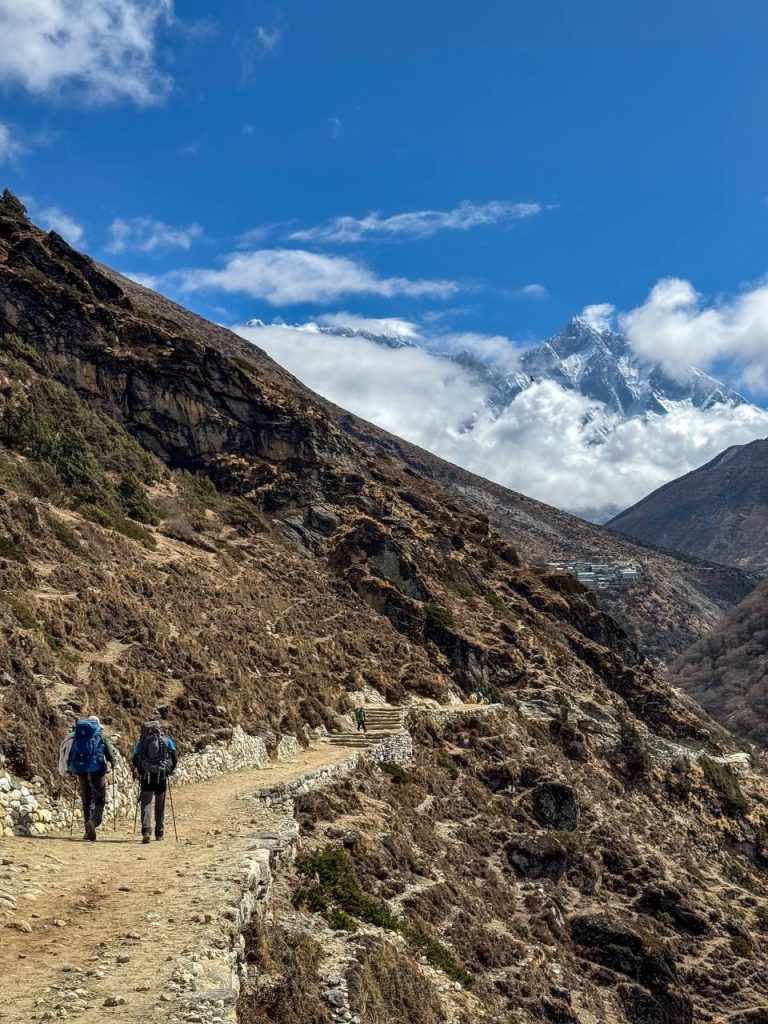
Today we continue ascending through the Dudh Koshi Valley.
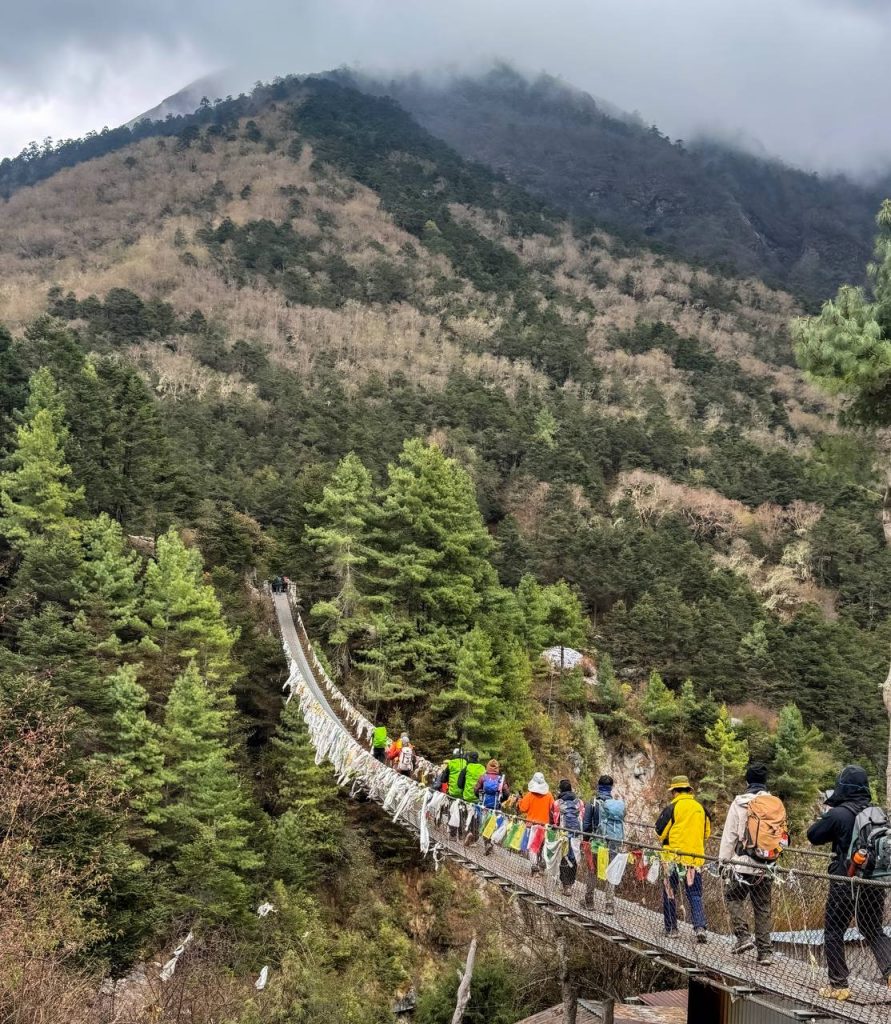
The trail passes through pine forests, small settlements and famous suspension bridges. After entering Sagarmatha National Park, the route gradually becomes steeper.
By the end of the day, we reach Namche Bazaar — one of the main centers of the Khumbu region.
Overnight: Namche Bazaar.
Meals: Breakfast, lunch and dinner.
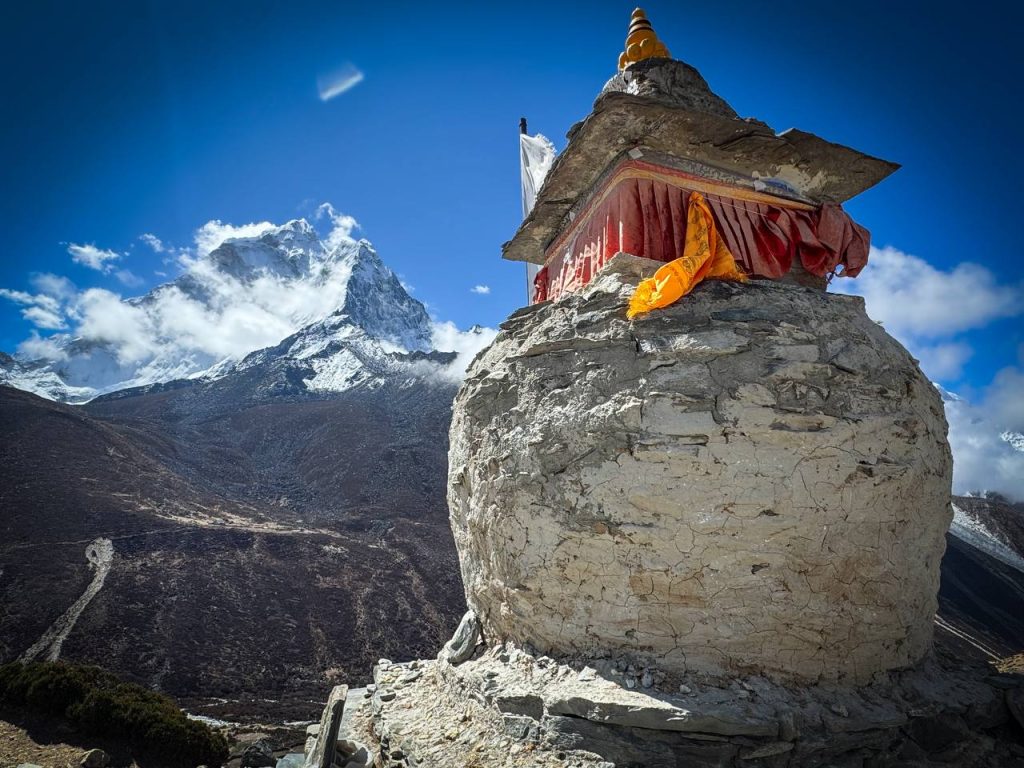
Day 4. Namche Bazaar — Acclimatization Day
Today we remain in Namche Bazaar.
The day is dedicated to acclimatization to the altitude.
We will take an acclimatization hike in the surroundings of Namche Bazaar. Depending on weather conditions and the condition of the group, we may walk towards Khumjung or one of the viewpoints in the region.
There will also be time to explore Namche Bazaar itself — its market, shops, cafés and the atmosphere of this famous mountain village.
Proper acclimatization is an important part of the Everest Base Camp Trek, as the route gradually climbs above 5,000 meters.
Overnight: Namche Bazaar.
Meals: Breakfast, lunch and dinner.
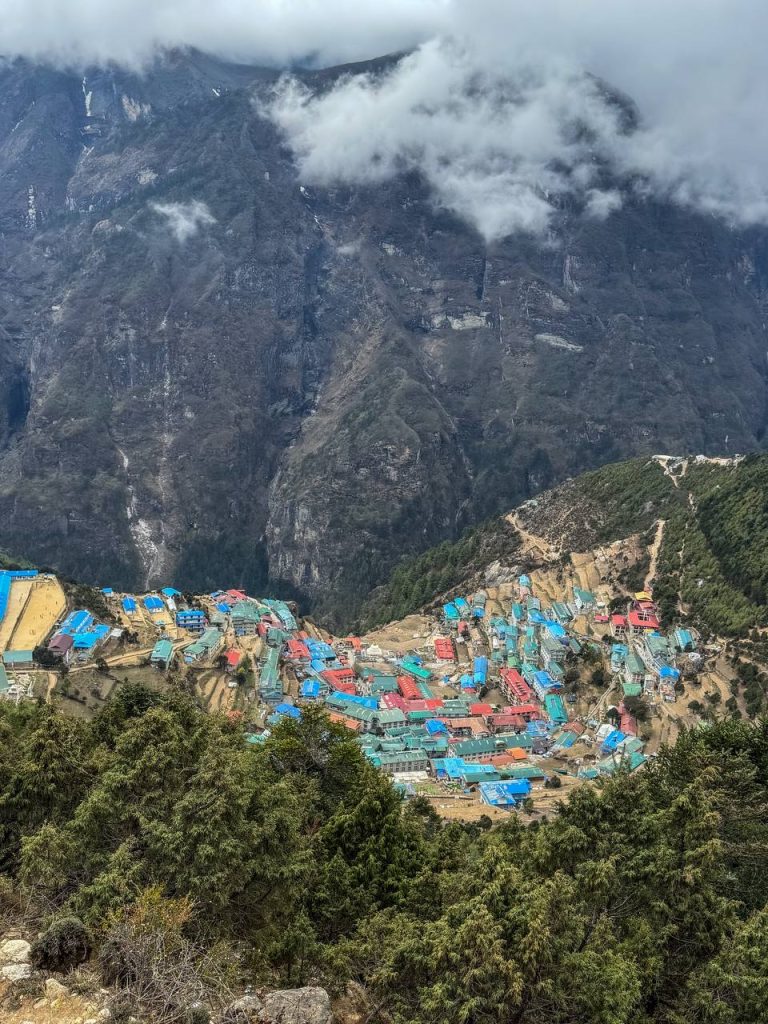
Day 5. Namche Bazaar — Tengboche
Distance: approximately 10 km
Duration: 5–6 hours
Altitude of Tengboche: approximately 3,860 m
Today we continue towards Tengboche.
The route follows mountain slopes with views of Everest, Lhotse, Ama Dablam and other peaks.
After Phunki Tenga, the trail begins its ascent towards Tengboche.
Here stands the famous Tengboche Monastery, one of the leading Buddhist centers in the Khumbu region.
Overnight: Tengboche.
Meals: Breakfast, lunch and dinner.
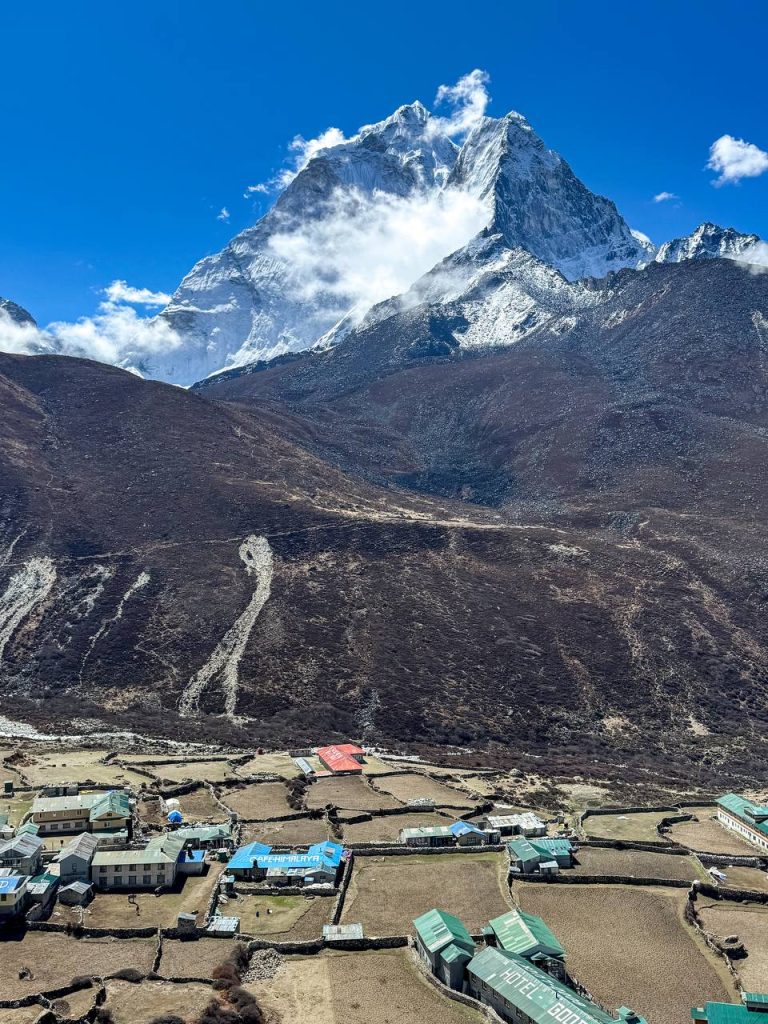
Day 6. Tengboche — Pangboche — Dingboche
Distance: approximately 9 km
Duration: 5–6 hours
Altitude of Dingboche: approximately 4,410 m
Today the route continues to gradually gain altitude.
Via Pangboche, we head towards Dingboche. Along the way, we enjoy views of Ama Dablam, Lhotse and the surrounding mountains.
With every kilometer, the landscape becomes more alpine and vegetation becomes increasingly sparse.
Overnight: Dingboche.
Meals: Breakfast, lunch and dinner.
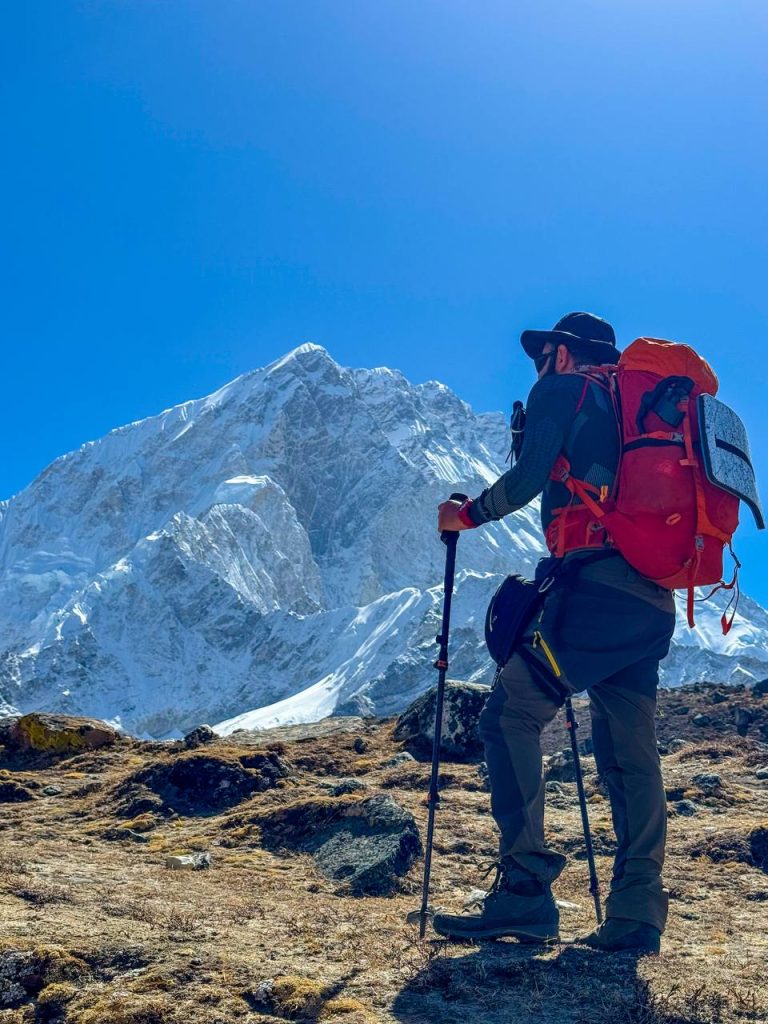
Day 7. Dingboche — Acclimatization Day
Another important day for adapting to the altitude.
Today we take an acclimatization hike in the Dingboche area. Depending on the condition of the participants and weather conditions, we may ascend towards Nangkartshang.
The main purpose of the day is not to cover the maximum distance, but to prepare the body for the further ascent.
Overnight: Dingboche.
Meals: Breakfast, lunch and dinner.
Day 8. Dingboche — Thukla — Lobuche
Distance: approximately 10 km
Duration: 4–5 hours
Altitude of Lobuche: approximately 4,940 m
Today we leave Dingboche and continue towards the high-altitude zone.
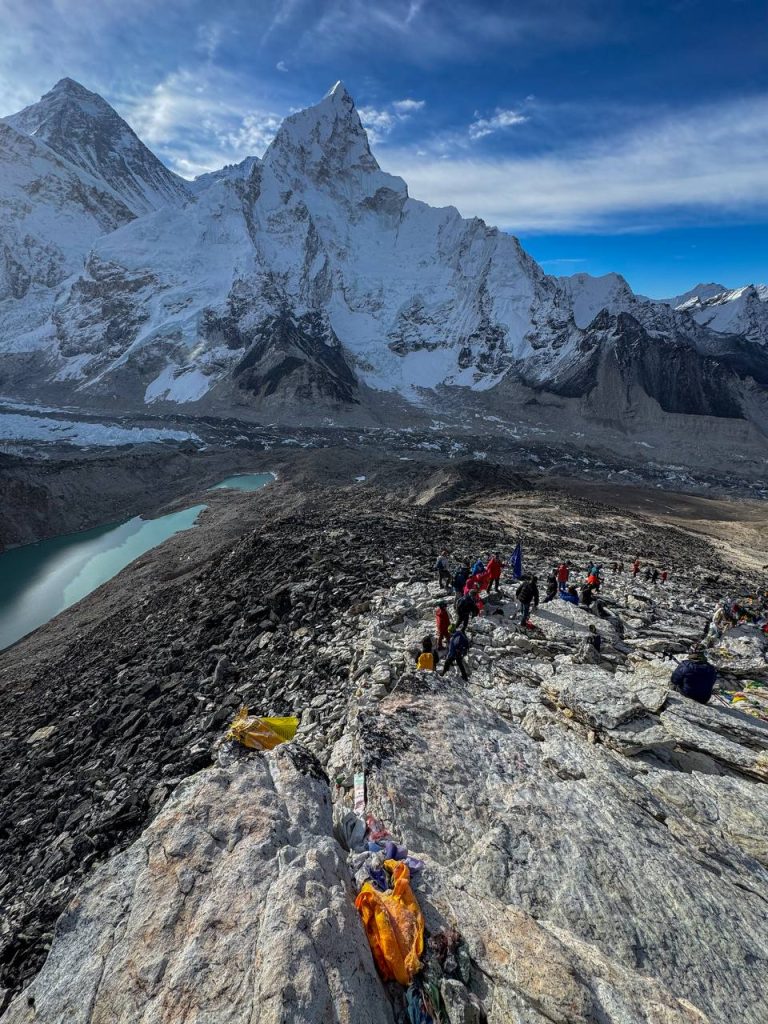
The route passes through Thukla, where memorials commemorate climbers and trekkers who lost their lives in the Himalayas.
The trail then ascends towards Lobuche.
The landscape becomes increasingly rugged: there are almost no trees, while rocky slopes, glaciers and high Himalayan peaks dominate the surroundings.
Overnight: Lobuche.
Meals: Breakfast, lunch and dinner.
Day 9. Lobuche — Gorak Shep — Kala Patthar
Distance: approximately 10–12 km
Duration: approximately 8–9 hours
Maximum altitude: 5,545 m
One of the most demanding days of the entire journey.
Early in the morning, we depart from Lobuche towards Gorak Shep.
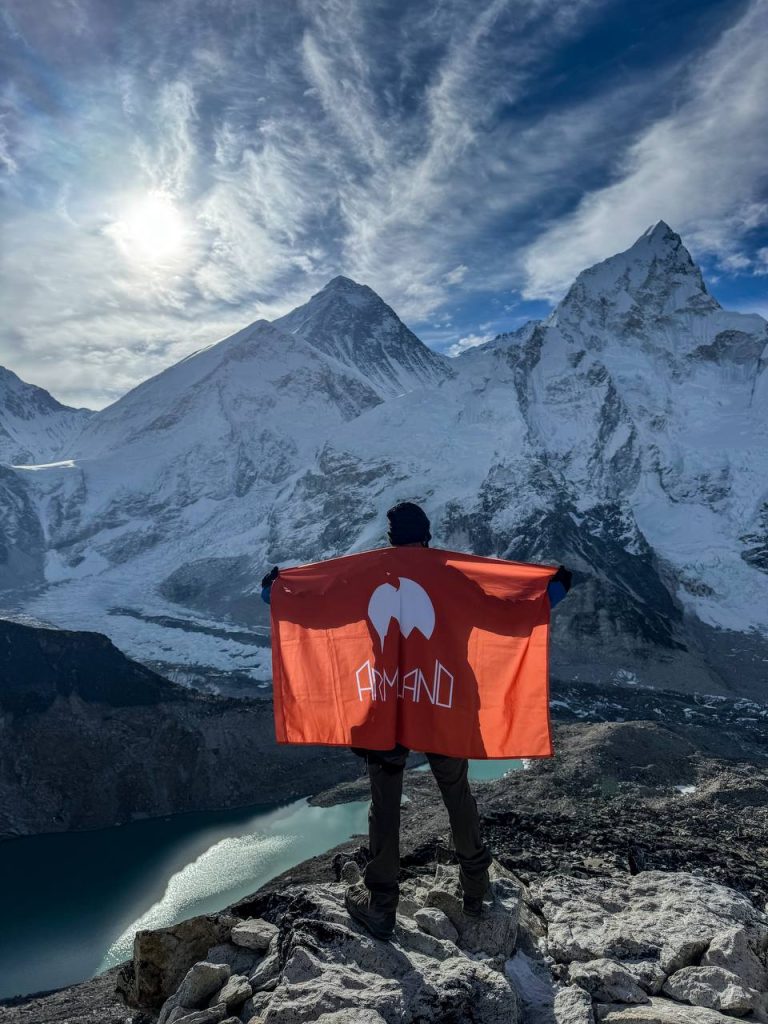
After a short rest, we continue ascending to Kala Patthar — 5,545 m.
From this viewpoint, one of the most famous views of Mount Everest opens before us.
After the ascent, we return to Gorak Shep.
Overnight: Gorak Shep.
Meals: Breakfast, lunch and dinner.
Day 10. Gorak Shep — Everest Base Camp — Pheriche
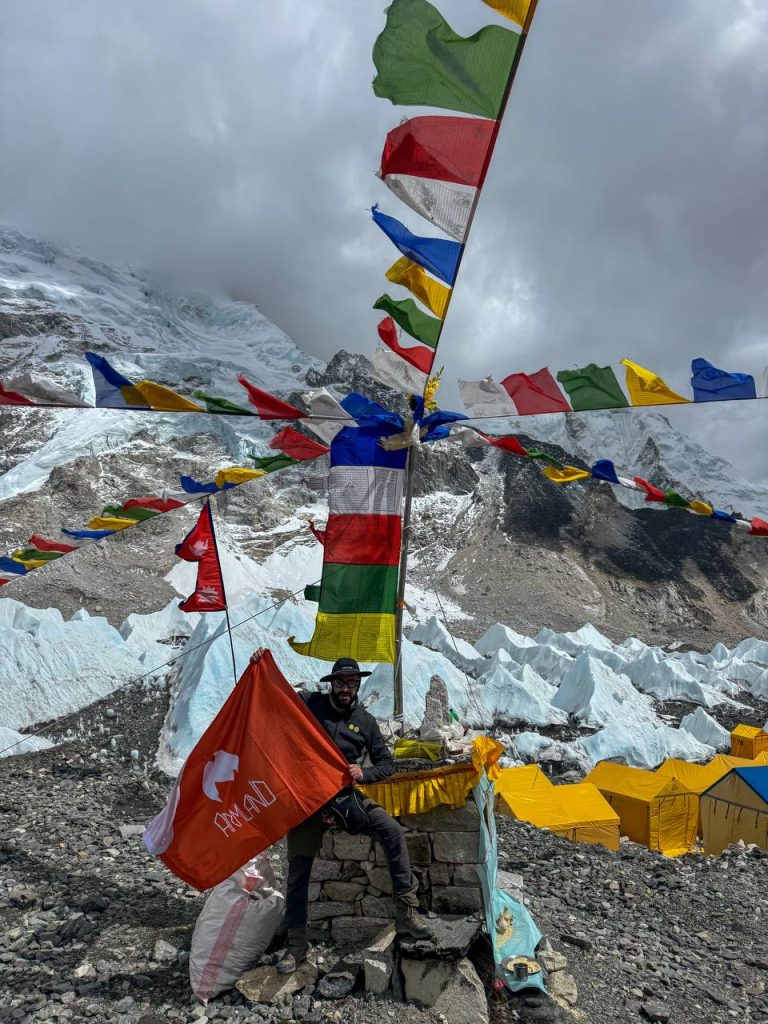
Altitude of Everest Base Camp: approximately 5,364 m
Today is the highlight of our journey.
From Gorak Shep, we set out towards Everest Base Camp.
The trail crosses rugged high-altitude terrain in the Khumbu Glacier area. At this section, it is particularly important to move carefully and maintain the pace set by the guide.
After reaching Everest Base Camp, we spend time at one of the most famous locations in the history of world mountaineering.
After returning to Gorak Shep, we continue descending towards Pheriche.
Overnight: Pheriche.
Meals: Breakfast, lunch and dinner.
Day 11. Pheriche — Namche Bazaar
Distance: approximately 15 km
Duration: 6–7 hours
After reaching Everest Base Camp, we begin our descent.
We gradually lose altitude and return towards Namche Bazaar.
With every hour, vegetation becomes more abundant, the air becomes denser and the route becomes physically easier.
Overnight: Namche Bazaar.
Meals: Breakfast, lunch and dinner.
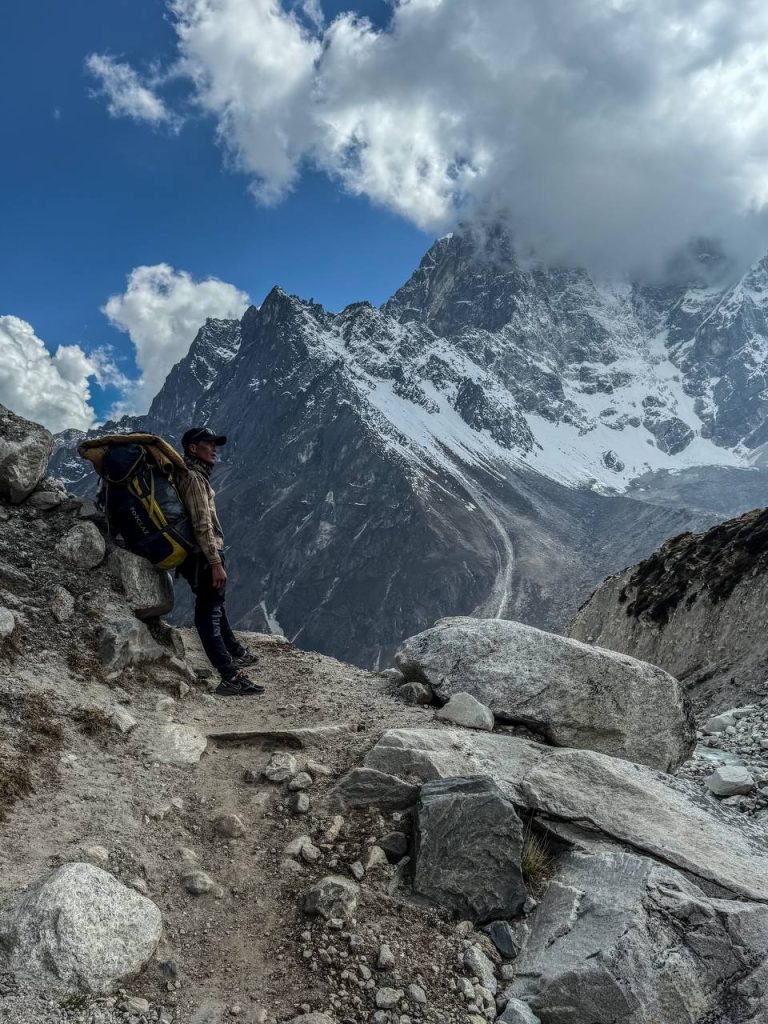
Day 12. Namche Bazaar — Lukla
Distance: approximately 19 km
Duration: 6–7 hours
The final full day of trekking.
We descend along the familiar trail through mountain villages, forests and suspension bridges.
By evening, we reach Lukla.
This is our final evening in the Himalayas before returning to Kathmandu.
Overnight: Lukla.
Meals: Breakfast, lunch and dinner.
Day 13. Lukla — Kathmandu
Morning flight from Lukla to Kathmandu.
After arrival, transfer to the hotel, rest and free time.
In the evening, a celebratory dinner will be held to mark the completion of the Everest Base Camp Trek.
Overnight: Kathmandu.
Meals: Breakfast and dinner.
Day 14. Kathmandu — Reserve Day
The reserve day is intended for possible itinerary changes, primarily due to weather conditions and domestic flights in the mountain region.
If the reserve day is not required, it may be used for additional rest or an excursion in Kathmandu.
Day 15. Kathmandu — Yerevan
After breakfast, free time or an excursion program in Kathmandu, depending on the time of the international flight.
Transfer to the airport.
Departure for Yerevan.
Meals: Breakfast.
Difficulty of the Everest Base Camp Trek
Everest Base Camp Trek is a challenging high-altitude trekking route.
The main difficulty is related not only to the duration of the daily hikes but also to the gradual gain in altitude.
The route starts in Lukla at approximately 2,850 m and gradually climbs above 5,000 m. The highest point of the program is Kala Patthar at 5,545 m.
Participants should be prepared for multi-day walking, long trekking days, cold temperatures, thin air and changing weather conditions.
Previous experience with multi-day hikes and mountain routes is a significant advantage.
For participants of our tour, preliminary mountain preparation is provided, including an ascent of the Western Summit of Mount Aragats.
Altitude and Acclimatization
One of the main features of the Everest Base Camp Trek is the gradual gain in altitude.
Lukla — approximately 2,850 m
This is where the trekking section of the route begins.
Namche Bazaar — approximately 3,440–3,500 m
A dedicated acclimatization day is scheduled here.
Tengboche — approximately 3,860 m
We continue our gradual ascent.
Dingboche — approximately 4,410 m
Another acclimatization day is scheduled here.
Lobuche — approximately 4,940 m
We are now in the high-altitude zone.
Gorak Shep — approximately 5,160 m
The last settlement before Everest Base Camp.
Everest Base Camp — approximately 5,364 m
The main goal of the trek.
Kala Patthar — 5,545 m
The highest point of the program.
Proper acclimatization and gradual altitude gain are among the most important conditions for completing the route safely.
Altitude Sickness
As altitude increases, the risk of altitude sickness also increases.
This is why the program includes acclimatization days in Namche Bazaar and Dingboche.
Participants should pay close attention to their well-being and immediately inform the guide of any unusual or worsening symptoms.
If a participant’s condition significantly deteriorates, their safety takes priority, and the route may be modified or discontinued.
How to Prepare for the Everest Base Camp Trek
To successfully complete the route, it is recommended to begin preparing in advance.
Cardio Training
- Walking
- Running
- Stair climbing
- Cycling
- Other aerobic activities
Strength Training
Special attention should be given to:
- Legs
- Glutes
- Core
- Back muscles
Mountain Preparation
The following will be a significant advantage:
- Day hikes
- Multi-day treks
- Altitude gain
- Hiking with a backpack
- Endurance training
Before the Trip
You should:
- Check your equipment
- Choose comfortable trekking boots
- Prepare a sleeping bag and warm clothing
- Get accustomed to long-distance walking in advance
- Have the necessary medical consultation if you have any individual limitations
ArmLand participants will have a preliminary mountain hike to the Western Summit of Mount Aragats.
Best Time for the Everest Base Camp Trek
The autumn and spring seasons are considered the most popular periods for trekking in the Everest region.
Our tour takes place during the autumn season.
However, mountain weather can change rapidly even during favorable seasons, so participants should be prepared for cold temperatures, wind and possible changes to the domestic transportation schedule.
Equipment for Everest Base Camp
For the Everest Base Camp Trek, you need to prepare equipment suitable for high-altitude conditions.
Footwear
- Professional trekking boots
- Trekking socks
- Gaiters
Clothing
- Thermal base layers
- Fleece layer
- Warm down/insulated jacket
- Waterproof/membrane jacket
- Warm hat
- Lightweight headwear
- Two pairs of gloves
High-Altitude Equipment
- Trekking poles
- Sleeping bag
- Headlamp
- Mountain sunglasses
- Sunscreen SPF 50+
- Thermos
- Personal first-aid kit
Backpacks
- Main backpack: 60–70 L
- Daypack: 20–35 L
Before the trip, participants receive a detailed list of the required equipment.
Cost of the Everest Base Camp Trek 2026
Group of 5–8 participants
USD 2,250 / person
Group of 9–12 participants
USD 1,950 / person
The price is per participant.
What Is Included in the Price
Airport — hotel — airport transfers according to the program
Domestic transfers according to the program
Flights on the Kathmandu — Lukla — Kathmandu route
Hotel accommodation in Kathmandu
Breakfasts in Kathmandu
Accommodation in mountain lodges
Three meals per day during the trek
Farewell dinner in Kathmandu
Drinking water at locations specified in the program
Necessary permits and local fees
Services of experienced English-speaking guides
Porter services — 1 porter for every 2 participants, up to 20 kg per porter
Group first-aid kit
Local and government taxes
A commemorative souvenir from ArmLand
What Is Not Included in the Price
- International flights Yerevan — Kathmandu — Yerevan
- Nepal visa
- Personal trekking equipment
- Travel insurance
- Meals in Kathmandu, except those specified in the program
- Wi-Fi
- Phone calls
- Charging electronic devices
- Laundry
- Hot showers
- Personal expenses
- Tips for guides, porters and other staff
Frequently Asked Questions
How many days does the Everest Base Camp Trek take?
Our program is designed for 15 days / 14 nights, including Kathmandu, domestic flights, trekking, acclimatization days and a reserve day.
What is the altitude of Everest Base Camp?
Everest Base Camp is located at approximately 5,364 m above sea level.
What is the highest altitude reached on the route?
The highest point of our program is Kala Patthar, 5,545 m.
Do I need mountaineering experience?
Technical mountaineering experience is not required, as the Everest Base Camp Trek is a trekking expedition rather than a summit ascent of Mount Everest.
However, good physical fitness, readiness for multi-day hiking and the ability to adapt to high altitude are required.
How difficult is the Everest Base Camp Trek?
The route is considered a challenging high-altitude trek. The main difficulties are altitude, long trekking days, cold temperatures and thin air.
Where does the trek begin?
The walking section of the classic route begins in Lukla, located at approximately 2,850 m. Nepal Tourism Board identifies Lukla as one of the main gateways to the Everest region.
Why are acclimatization days necessary?
They allow the body to gradually adapt to increasing altitude. Our program includes acclimatization days in Namche Bazaar and Dingboche.
What is Kala Patthar?
Kala Patthar is a famous viewpoint in the Everest region. Its altitude is 5,545 m, and it offers an impressive view of Mount Everest.
When is the best time to trek to Everest Base Camp?
The most popular seasons are spring and autumn. Our tour is scheduled for the autumn season.
What should I do if I feel unwell at high altitude?
You should immediately inform your guide of any symptoms. If your condition deteriorates, the itinerary may be modified in the interest of participant safety.
What happens if the flight to Lukla is delayed due to weather?
A reserve day is included in the program. In addition, the final domestic flight arrangements depend on weather and operational conditions.
Why Everest Base Camp with ArmLand?
Everest Base Camp is not simply a point on a map.
It is a journey through the heart of the Himalayas.
You will pass through Sherpa villages, Buddhist monasteries and high-altitude valleys, see glaciers and legendary peaks, and gradually ascend to a place where the air becomes thinner and the mountains become immense.
We prepare participants for the route in advance, assist with equipment selection and accompany the group throughout the journey.
And most importantly — you will not walk this path alone.
Other High-Altitude Adventures with ArmLand
If Everest Base Camp is your next step into the world of high-altitude adventures, discover other expedition routes offered by ArmLand: