


MOUNT KHUSTUP
Mount Khustup is one of the most impressive peaks in Armenia’s Syunik Province. Known for its rocky slopes, alpine meadows, sweeping mountain views, and historical significance, it rises above the landscape near Kapan. The mountain attracts hikers seeking to explore southern Armenia’s rugged wilderness and experience a memorable highland adventure.
Hiking Mount Khustup is more than a physical challenge. It is a journey into the natural beauty and historical heritage of Syunik.
Where Is Mount Khustup?
Mount Khustup is located in southern Armenia, in Syunik Province, approximately 9–10 km southwest of Kapan. It is the highest peak of the Khustup-Katar mountain range, which forms the southern branch of the Bargushat Mountains.
Mount Khustup rises to 3,201 metres above sea level. The Khustup-Katar range is often described as approximately 44 km long.
The mountain massif consists of volcanic and sedimentary rocks. Its slopes are rugged and dissected, with rocky outcrops and steep cliffs in places. Forests cover the northeastern slopes, while alpine meadows dominate higher elevations. As the elevation changes, so does the landscape, creating a varied and striking mountain environment.
The slopes of Khustup feature cliffs, caves, and numerous natural springs. Meltwater feeds mountain streams and rivers, including the Vachagan River, which is associated with the mountain’s slopes.
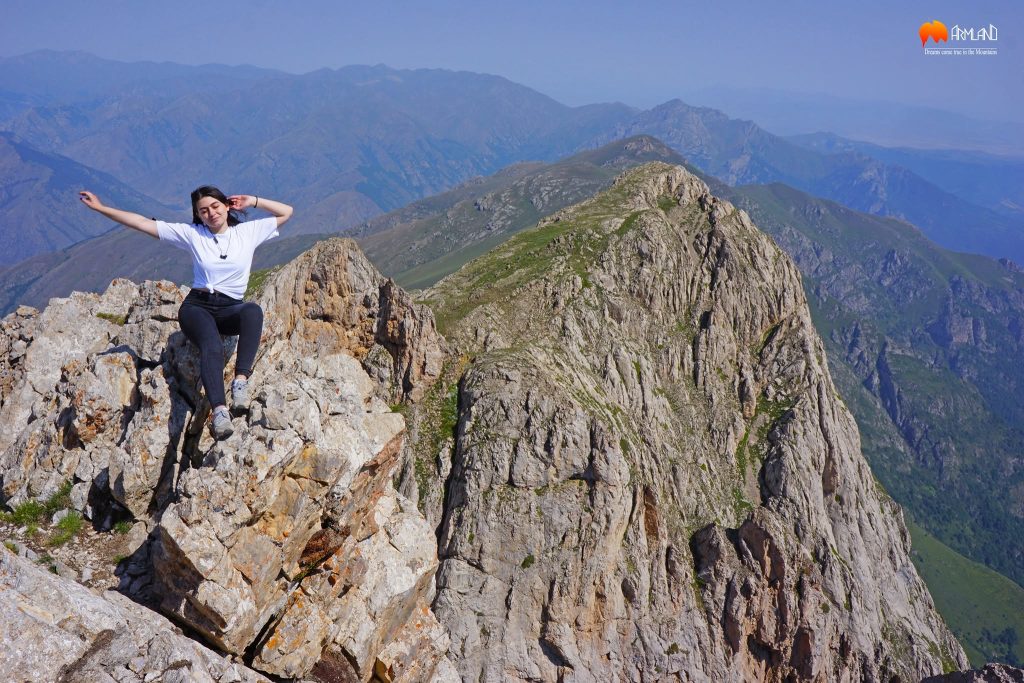
Hiking Mount Khustup: A Mountain Adventure with an Overnight Stay
Reaching the summit requires careful planning, taking into account travel time from Kapan to the trailhead, mountain-road conditions, and the group’s fitness level.
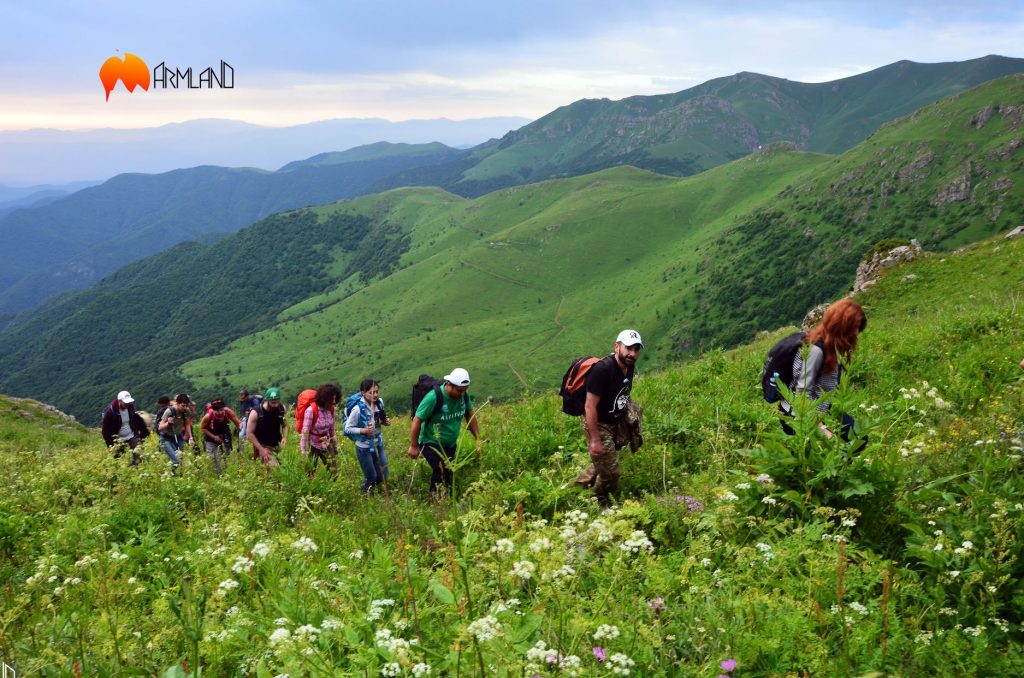
After arriving in Kapan, participants travel by off-road vehicles toward a campsite known as Navchay. The camp is set up there, and hikers spend the night in tents beneath Syunik’s star-filled sky.
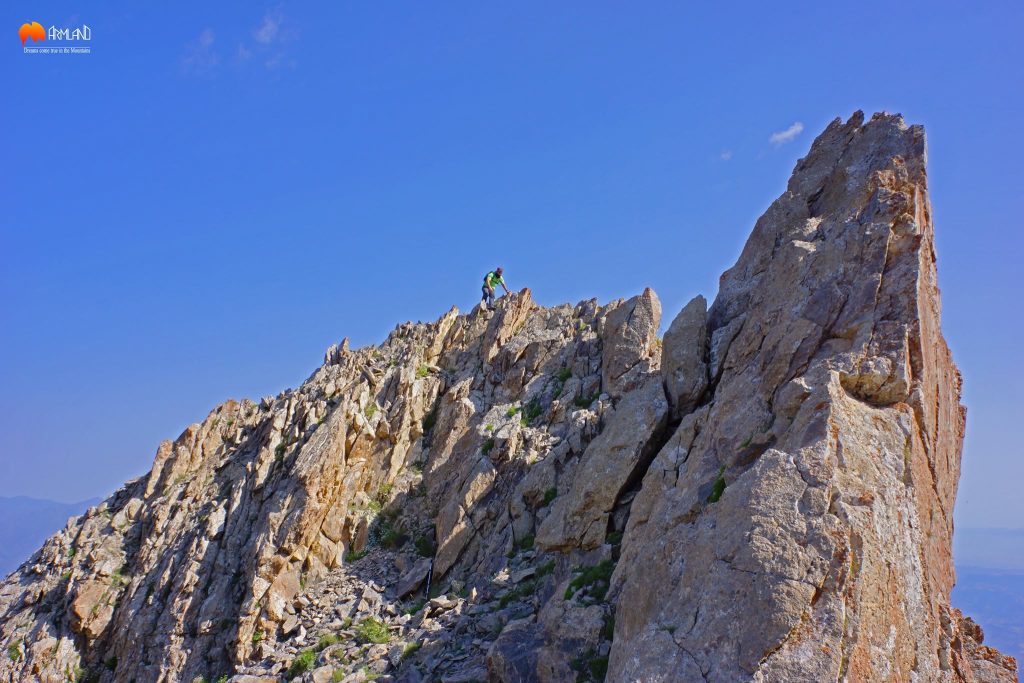
The ascent begins early the next morning, before sunrise or at first light. The route crosses open slopes and rugged mountain terrain, where weather conditions can change quickly. The final section is rocky and requires careful footing.
From the summit, expansive views stretch across the mountainous landscape of Syunik. On a clear day, hikers can see the long ridgelines of the Zangezur Mountains and the surrounding highlands. At the top, Khustup reveals its distinctive character: rugged, majestic, and remarkably beautiful.
According to the route description, a cold-water spring lies approximately 200 metres below the summit. Its accessibility should be confirmed before the hike. Do not rely on it as your only water source or drink from a natural spring without reliable information about its safety.
Khustup: A Sacred Mountain
For the people of Syunik, Khustup is more than a natural landmark. It is also a place of spiritual and historical significance. The mountain has long been regarded as a place of prayer and pilgrimage.
One proposed explanation of the mountain’s name connects it with the word khutu, interpreted in some accounts as meaning “prayer.” This should be treated as one theory of the name’s origin rather than a conclusively established fact.
The mountain’s special place in local culture is reflected in regional traditions and stories. At Khustup, the natural landscape and historical memory come together, making it one of Syunik’s most meaningful landmarks.
The Legacy of Garegin Nzhdeh on Mount Khustup
The historical significance of Khustup is closely associated with Garegin Nzhdeh, an Armenian national figure and military commander. His remains are buried on the mountainside near Kozni Spring.
A bust of Nzhdeh stands at the site, facing the mountain landscapes of Syunik. For many hikers, visiting this place becomes one of the most moving moments of the journey. It offers an opportunity not only to appreciate the scenery but also to reflect on important chapters of Armenian history and the region’s national heritage.
Mount Khustup therefore brings together mountain adventure, the beauty of Armenia’s natural landscape, and historical remembrance.
Mount Khustup is more than a mountain. It is a symbol of Syunik’s pride, natural beauty, strength, and historical memory.


