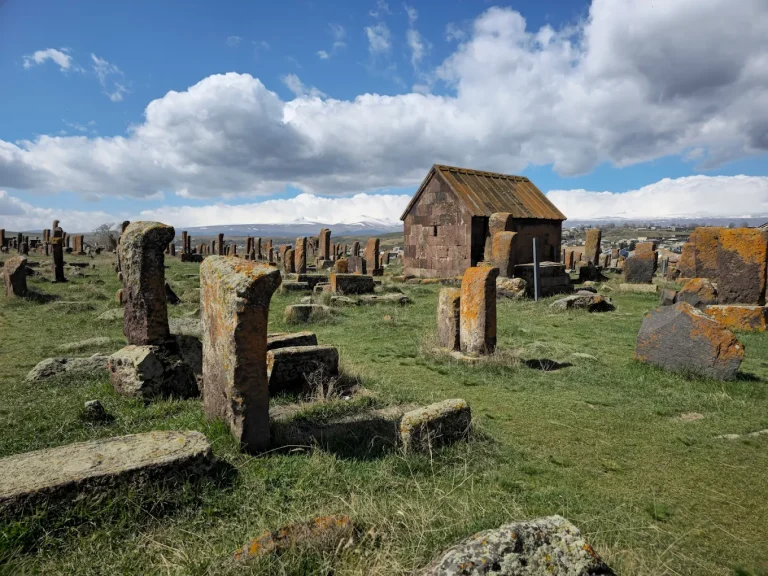
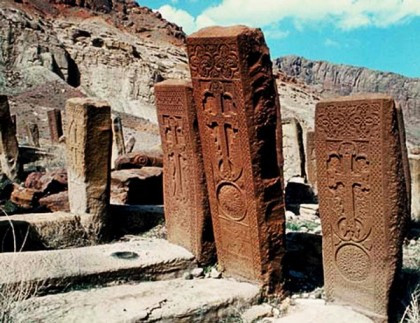
Armenia is a unique country with over 50,000 handcrafted khachkars, each one distinct from the others. One of the hypotheses for the appearance of khachkars is that people wanted to have silent evidence of Christianity. And the installation of crosses turned out to be a very effective means of spreading Christianity.
Khachkars are rectangular monuments that are installed in the courtyards of churches to commemorate the adoption of Christianity, national holidays or martyrs. Throughout the millennia-old history of Armenian khachkars, thousands have been created. However, only four of them depict Christ, and these are known as Khachkars of Salvation. Remarkably, all the known Khachkars of Salvation in Armenia were created within a 12-year period.
Khachkars featuring sculptural depictions of the Crucifixion are traditionally called “All-Savior Khachkars”. These khachkars display scenes of Christ’s Crucifixion and Descent from the Cross, making them distinct among Armenian stone crosses.
Location of the Khachkars
The oldest all-Savior khachkar is located in Haghpat and dates back to 1273. Two of the other three khachkars are in Echmiadzin. One of them is carved from wood and was transferred to the Echmiadzin museum from the Havuts Tar monastery complex. The fourth is located in the village of Dsegh.
Why “All-Savior“?
In ancient times, believers were convinced that these khachkars possessed the power to heal illnesses and protect against evil. As a result, these sacred stone crosses gained a special spiritual significance and became revered symbols of divine salvation.