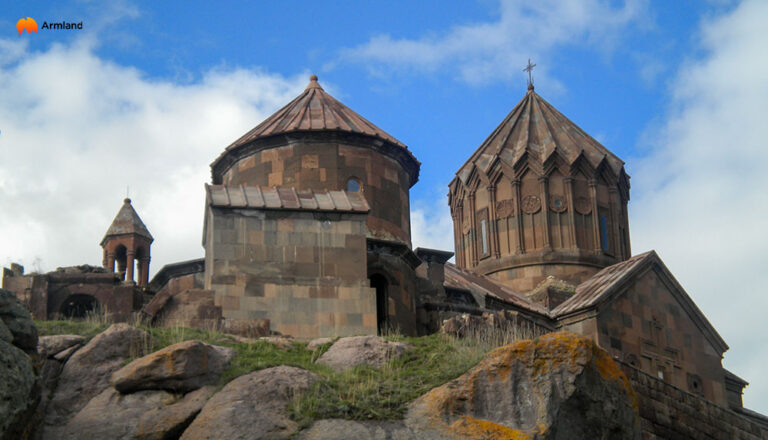
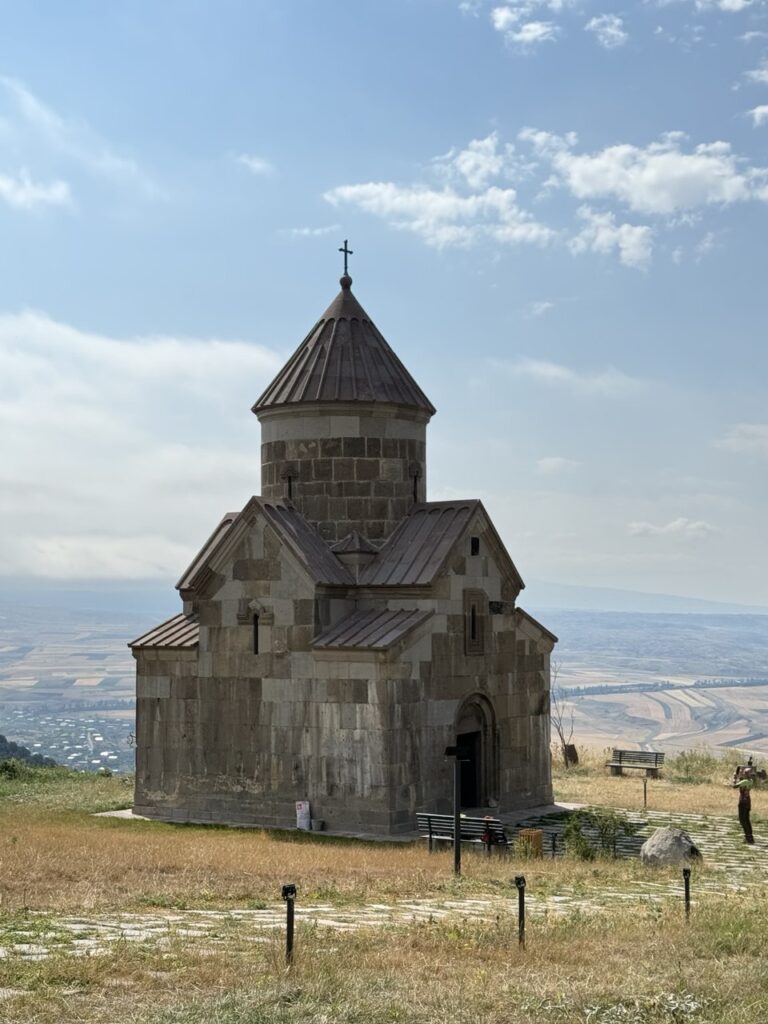
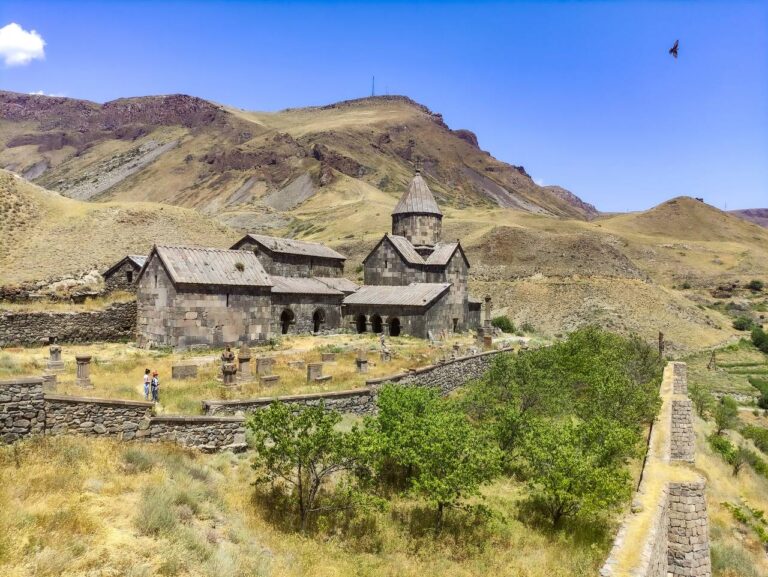
Hermon Monastery is considered one of the oldest monuments in the Vayots Dzor region. According to the historian Stepanos Orbelian, it was founded in 936 by the Syunik prince Smbat. The monastery is located in the Yeghegis Gorge, on the slope of the Yeghegis River. It was also known as Ahermon and Knevank. The monastery was named after the hermit Ahermon.
Structure of the Monastery
The first church built in the monastery was domed and was named after Gregory the Illuminator. The current church of Saint Gregory was constructed in the 17th century on the territory of the old church. It is a three-nave basilica made of polished basalt. Today, the church is partially ruined, with its dome and part of the southern wall destroyed.
The monastery was completely fenced. Currently, part of the walls have been preserved. Within the walled territory of the monastery, traces of the buildings from the original complex can still be seen.
Princess Sopi, who built Gndevank in the 10th century, purchased and donated a village, gardens, flower fields, and more to Hermon Monastery. The monastery also received significant material support from the Syunik princes of the Orbelian dynasty.
The Hermon Monastery School
In 1338, the archpriest Kiliketsi, who was a graduate of the famous Gladzor University and a student of Yesai Nchetsi, settled in the Hermon Monastery. He established a new school here, which became known as the Hermon Monastery School. The school operated concurrently with Gladzor University.
During the reign of the local abbot Hovhannes Hermonetsi, in the 40s of the 15th century, the monastery school received pan-Armenian recognition. The monastery produced distinguished intellectuals, writers, and artists. Numerous manuscripts were written and copied here. About 30 of them have been preserved.
The Hermon Monastery School functioned for approximately 100 years.