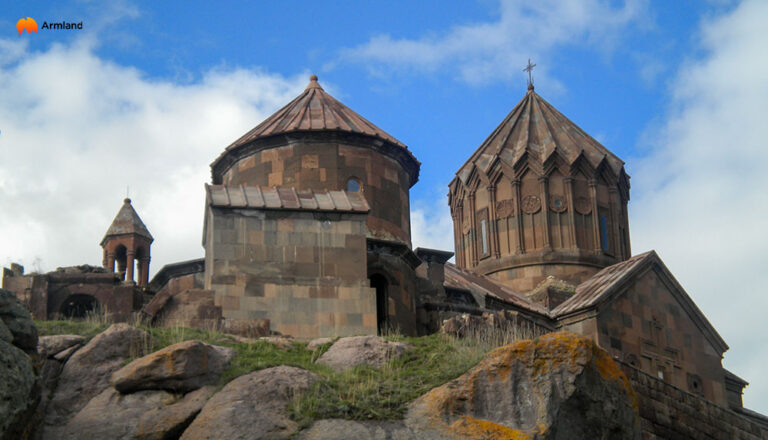
Vorotnavank is located 2 km southeast of the village of Vaghatin in the Syunik Province of the Republic of Armenia. Also known as the Vaghatni Monastery, it is one of the remarkable monuments of Armenian architecture.
Historical Overview
The village of Vaghatin was first mentioned in the 906 writings of historian Stepanos Orbelian. In the estate deed confirming the borders of Tatev monastery, and in the lists of the historiography, it is in Tsghuk province and has 12 amounts of tribute. According to Orbelian, an ancient church dedicated to Saint Gregory once stood at the site of the monastery. This church was either renovated or replaced by another one built by Archimandrite Stepanos. While the exact identity of this church remains unclear, a construction inscription attributed to Stepanos is carved in stone.
In 1000, Queen Shahandukht of Syunik, following the orders of her husband Smbat, built the Church of Saint Karapet along with a hall to its west. Over time, additional structures were added to the monastery courtyard, including two or three more churches, another hall, a guesthouse, storage facilities, granaries, and other auxiliary buildings. In the courtyard south of the Church of Saint Karapet stands a memorial scepter resembling the scepter monument of Tatev, but slightly smaller.
In the 1270s, the Church of Saint Stepanos Nakhavka was renovated. In 1315, Princes Burtel and Bugda Orbelian visited Vorotnavank, donating gardens, villages, and funds for the monastery’s restoration. During the 1340s, Hovhan Vorotnetzi moved from Gladzor University to Vorotnavank.
In the late 13th century, Grigor Tatevatsi worked at Vorotnavank, where he copied Peter of Aragon’s Book of Seven Virtues in 1386. In 1407, the monastery was visited by Thomas of Metsoph. In 1438, Abbot Sarkis Angeghaakottsi reconstructed the Church of Saint Gregory the Illuminator. Vorotnavank remained active until the early 20th century.
In 1931, an earthquake destroyed the dome and roof of the Church of Saint Karapet, along with the memorial column, porticos, auxiliary buildings, and monastery walls.
Structure of the Monastery
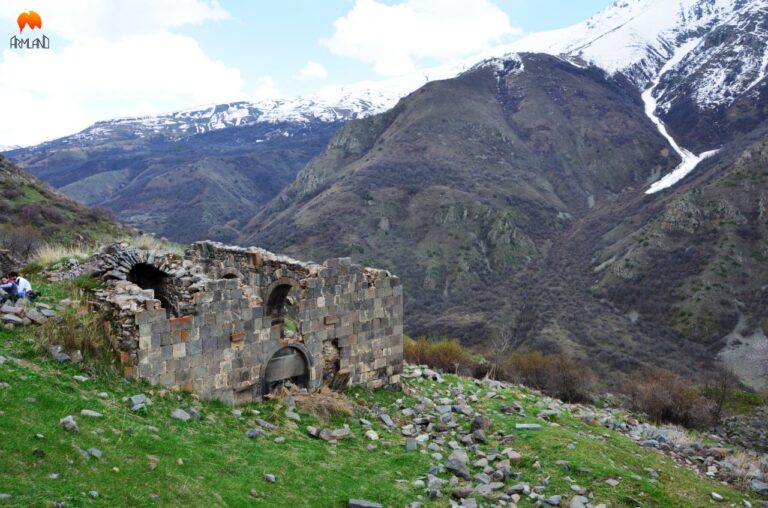
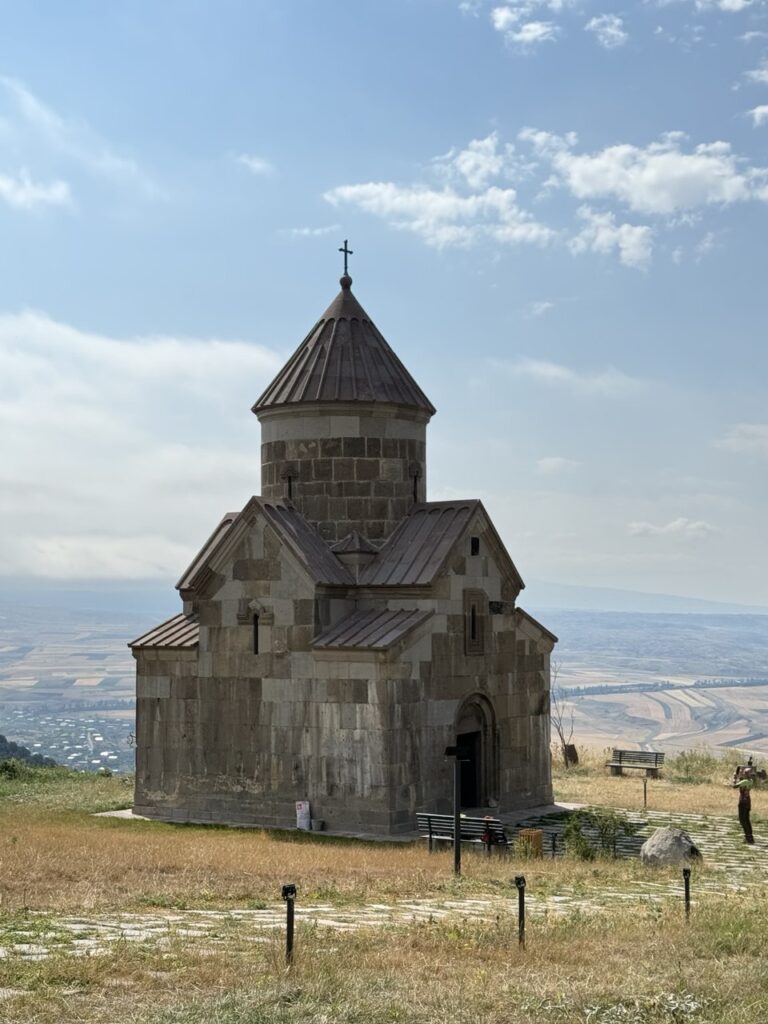
The complex includes the churches of St. Gregory, St. Stepanos, and St. Karapet, as well as a narthex, porticos, a guesthouse, auxiliary buildings, walls, and a cemetery. All structures are arranged along the perimeter of a rectangular courtyard, predominantly on the northern and eastern sides, and are constructed of locally sourced basalt stones.
Church of St. Gregory: A single-nave structure now in ruins.
Church of St. Stepanos Nakhavka: Located northeast of St. Gregory’s Church, this is a single-nave, vaulted structure.
Church of St. Karapet: Located in the eastern part of the complex, on the southeastern side of the church of St. Stepanos. Its interior was adorned with frescoes, with the surviving portion in the northern part of the altar depicting a starry sky with an angel at its center.