


MOUNT ARA
Mount Ara is one of Armenia’s fascinating hiking destinations, combining striking mountain scenery, diverse landscapes, and traditional Armenian legends. A hike here takes you across open slopes, offers views of Mount Aragats, leads toward the summit, and provides an opportunity to discover Tsaghkevank, a mysterious rock-cut shrine.
If you are looking for an outdoor adventure not far from Yerevan, Mount Ara is worth considering for your next hiking trip.
Mount Ara: Location and Natural Landscape
Mount Ara is an extinct volcano located along the boundary between Armenia’s Kotayk and Aragatsotn provinces, between the Kasagh and Hrazdan rivers. Its elevation is reported differently across sources; ArmLand’s route description lists the summit at 2,605 metres.
The mountain stands out because of its isolated position and distinctive silhouette. It can be seen from many surrounding settlements and elevated viewpoints. On a clear day, the slopes and summit offer beautiful panoramas of Armenia’s mountainous landscape, including particularly impressive views of snow-covered Mount Aragats.
The landscape changes with elevation and terrain. Dry and semi-arid areas give way to steppe, while some ravines contain tree-covered sections. This variety makes Mount Ara appealing to hikers, nature enthusiasts, and visitors interested in Armenia’s natural heritage.
Articles about Mount Ara frequently mention approximately 650 plant species. This figure should be verified against reliable botanical sources before being used as a confirmed fact.
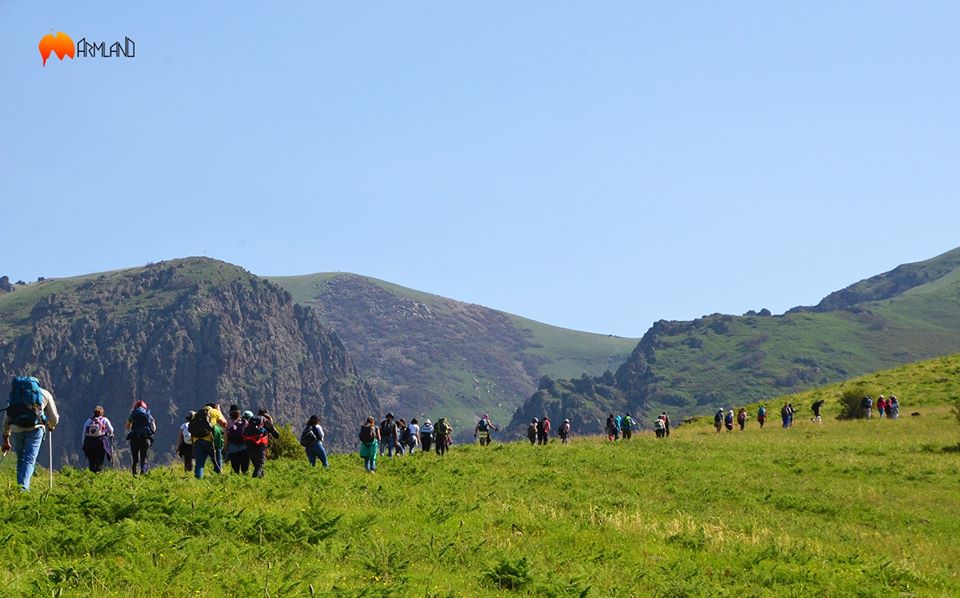
Hiking Mount Ara: Routes and Scenic Views
Several routes lead up Mount Ara. One of the commonly used options starts on the southern slope and allows hikers to combine the ascent with a visit to Tsaghkevank.
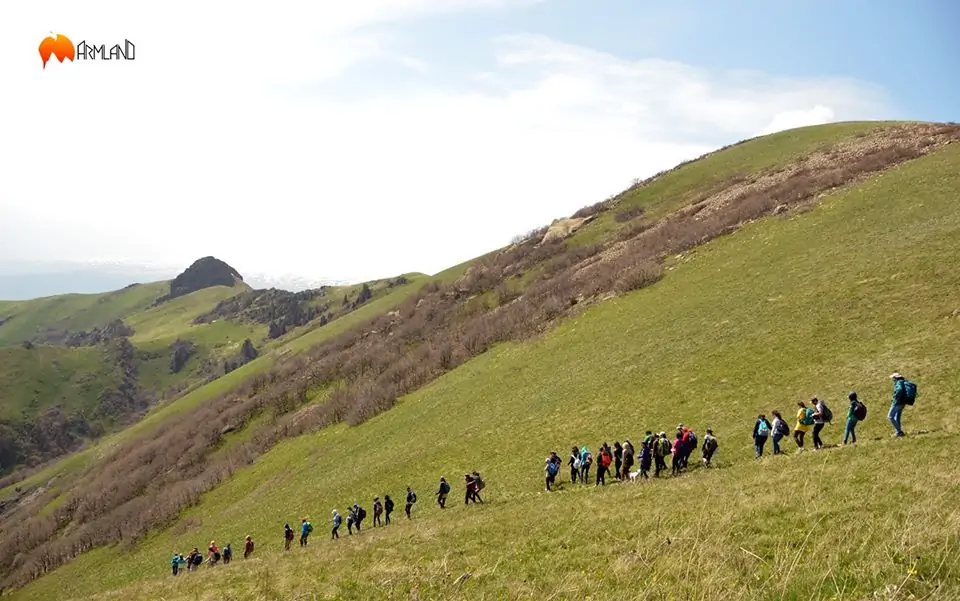
On some versions of the classic route, hikers descend from the summit through a rocky, partly steep and wooded ravine toward the shrine. This descent can be more challenging than the initial ascent, so the route should be selected according to weather conditions, trail conditions, and the group’s experience.
As you climb, broad mountain panoramas gradually unfold. The surrounding ridges and ravines become visible, while clear weather can reveal views toward Mount Aragats and the Teghenyats Mountains.
Hiking Mount Ara is about more than reaching the summit. It is also an opportunity to experience the mountain’s changing landscapes and discover the cultural traditions associated with the area.
Please note: Route distance, elevation gain, hiking duration, and difficulty depend on the starting point and chosen trail. These details should be completed with verified measurements for the specific ArmLand route before publication.
Mount Ara and the Legend of Ara the Beautiful
Mount Ara is associated with one of Armenia’s best-known traditional legends: the story of Ara the Beautiful and Semiramis, the queen of Assyria.
According to the legend, Semiramis heard of the beauty of Ara, the Armenian king, and wanted him to be by her side. When Ara rejected her, she led a military campaign against Armenia.
In a widely told version of the story, Ara dies in battle. Unwilling to accept his death, Semiramis orders his body to be found and attempts to bring him back to life with the help of the aralez—mythical beings in ancient Armenian belief said to revive the fallen by licking their wounds. However, Ara does not return to life.
In local tradition, the mountain’s outline resembles the body of a giant lying down. This is why Mount Ara is sometimes described as the “Sleeping Giant of Armenia,” an image associated with the legendary king.
The story of Ara the Beautiful and Semiramis is also recounted in Movses Khorenatsi’s History of Armenia. The connection between the mountain’s shape and the legend should nevertheless be understood as a traditional belief rather than a historically verified fact.
Tsaghkevank: A Rock-Cut Shrine on Mount Ara
Tsaghkevank is located on the southern slope of Mount Ara and is also known as the shrine of Saint Barbara. Set within a rock formation, this small pilgrimage site attracts both religious visitors and travellers interested in the mountain’s natural and cultural heritage.
Several legends are associated with Tsaghkevank. One concerns Saint Barbara. According to a popular account, Barbara embraced Christianity, was persecuted by her father, and sought refuge in a mountain cave. She was eventually found and martyred. In local belief, the water dripping inside the shrine is regarded as the saint’s tears.
Another folk legend tells the story of a young woman named Tsaghik. According to this version, she fled from a prince who wanted to take her by force and hid in a cave on Mount Ara. A shepherd, frightened by the prince, revealed her hiding place. Realising that she would be captured, Tsaghik threw herself from a cliff. The legend says that the shepherd and his sheep turned to stone, while the water dripping inside the cave became known as Tsaghik’s tears.
These stories belong to local folklore and form an important part of Tsaghkevank’s cultural significance.
The Water of Tsaghkevank and Local Beliefs
Water drips from the rock inside the shrine. Many visitors regard it as sacred or healing and take a small amount with them. This belief is connected to the legends of Saint Barbara and Tsaghik.
However, the water’s healing properties should not be presented as scientifically established without reliable medical evidence and appropriate laboratory testing. Anyone considering drinking water from a natural source should first ensure that it is safe.
Mount Ara is more than a summit—it is a meeting point of nature, mountain adventure, and Armenian folklore.


