TANDOOR
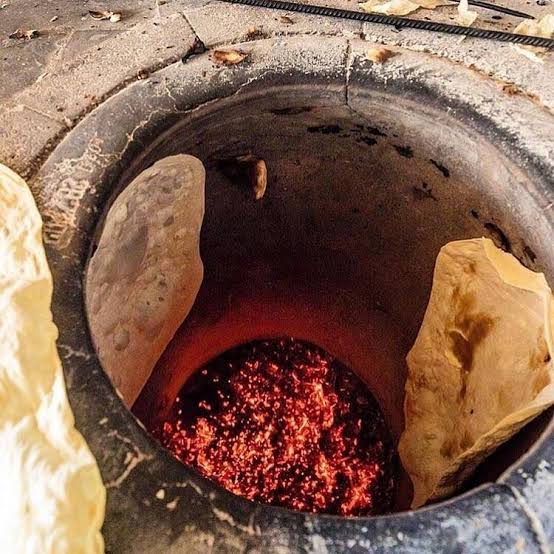
Since pagan times, the tandoor has played a significant role in the lives of Armenians. It was considered a symbol of the sun, and the fire within it represented worship of the sun. Even after the adoption of Christianity, the tonir continued to be considered sacred. In nearly every village, a priest was invited to bless a newly built tandoor. Newlyweds paid their first respect to the tandoor by kneeling in front of the tonir, facing east, and receiving the blessing of their ancestors.
The Origin of the Tandoor
Initially, fire for cooking was lit directly in a small pit dug into an earthen floor or in a clay pot. Fuel consisted of charcoal and branches. Over time, this method was improved and adapted for baking lavash.
The walls of the first tandoors were lined with clay. Rectangular pieces of smooth clay were sun-dried and then used to coat the interior walls of a pre-dug circular pit. In Armenia, early examples of tonirs have been found in Bronze Age tombs at Lchashen, Artashat (baker and blacksmith tonirs), Dvin, and other ancient sites.
Tonratun
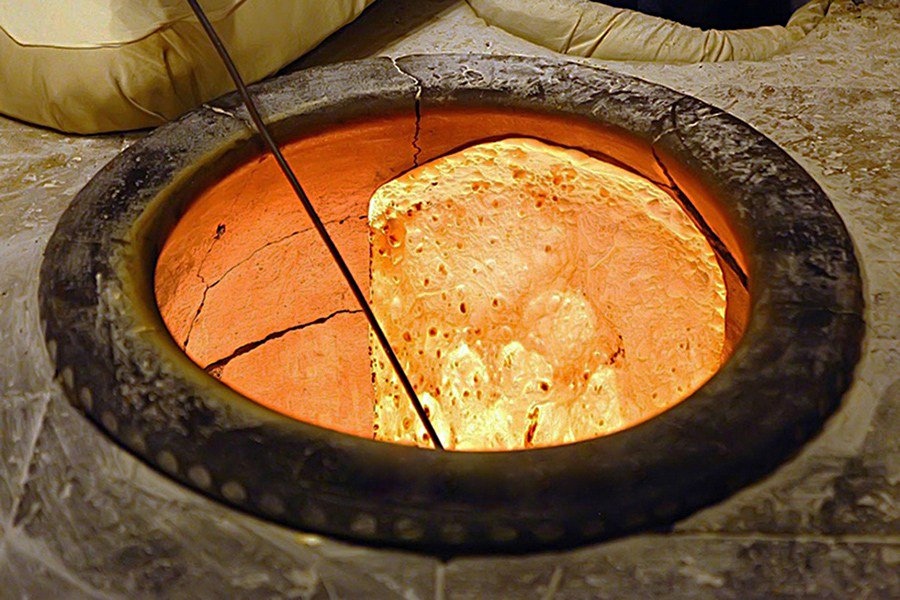
The multi-section stone constructions of ancient Armenian villages included a tonratun (kitchen), storage rooms, bedrooms, granaries, marag (livestock barns), and other areas. The tonratun was the most important part of the home.
At the opposite end of the doors in a large bakery, a small elevated section, often in the form of a shrine, was constructed. Here the floor was raised slightly above the general level of the bakery. The large lower area was called the “big house,” while the smaller raised section was referred to as the “small house.” In the center of the small house, large and small tandoors were placed. The large one was for baking bread, and the small one was for heating water and cooking. For those without a small house, a single tandoor was placed in the center of the large house.
When the bread-baking ceremony was completed and the fire in the tandoor still kept its warmth, the members of the house would gather around it, placing their feet inside for warmth. This was especially comforting during wet autumns and cold winters.
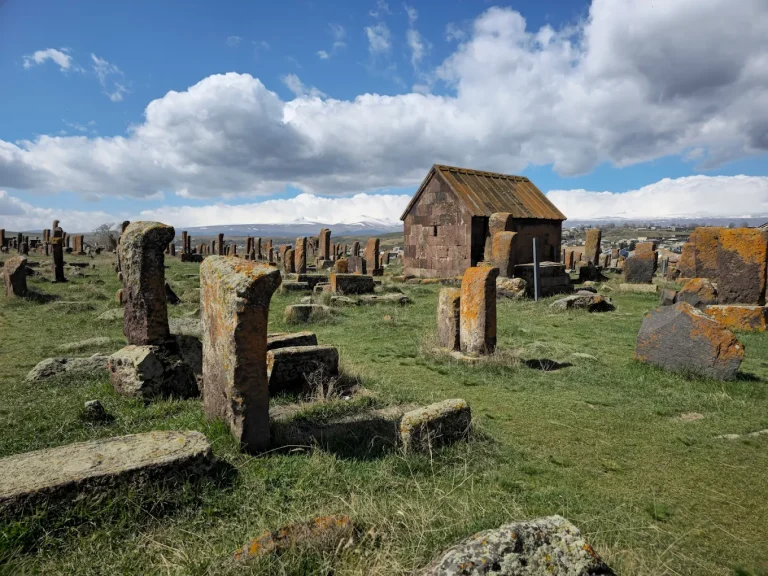
Traces of tandoors have been found in various settlements in the Armenian Highlands, dating back thousands of years.
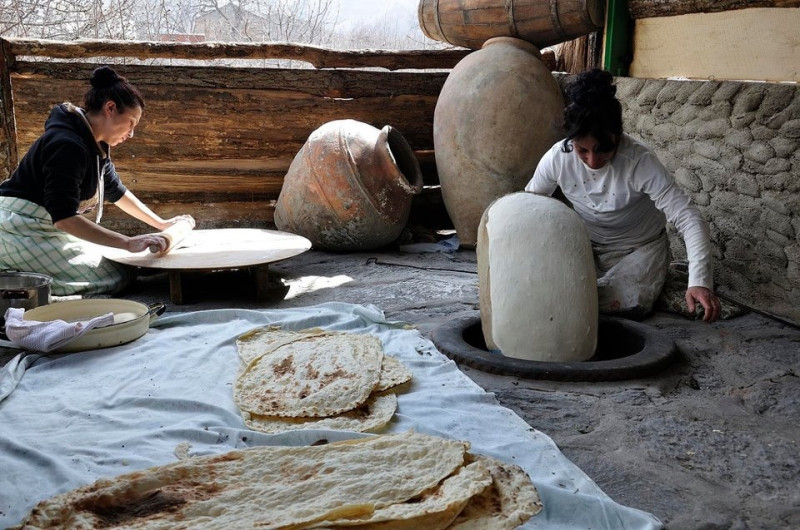
Although the role of the tandoor in Armenian daily life has diminished, it remains a significant feature in rural areas. It continues to be a place where neighbors and friends gather to share bread, exchange gossip and warm themselves.
The Legend of the Tandoor
According to tradition: In ancient times, the god of war, Vahagn, taught the art of war to the Armenian giant women and men. After evening training sessions, under the starlit sky, they gathered around a volcanic fire atop Mount Tondrak, talking, baking bread, and eating.
One day, Vahagn took a piece of fire from Tondrak and gave it to the Armenians. He instructed them to distribute the fire to others, build tandoors, light fires, and bake bread. He entrusted the women to always keep the fire burning. Vahagn ascended to the heavens and continues to watch from above, ensuring that the fire in every tandoor remains alight.