What Is an Avalanche?
An avalanche is the rapid movement of snow down a mountain slope. It can carry enormous amounts of snow, ice, rocks, and debris, posing a serious threat to hikers, mountaineers, skiers, and anyone travelling in mountainous terrain.
Avalanches can occur naturally or be triggered by human activity. Heavy snowfall, strong winds, rapid temperature changes, rainfall, and the instability of the existing snowpack can all contribute to avalanche formation.
Wind is particularly important because it redistributes snow, creating dense accumulations on certain slopes. These wind-loaded areas may become unstable even when the surrounding terrain appears relatively safe.
Avalanche danger depends on several interacting factors, including the weather, snowpack structure, slope angle, terrain features, and recent avalanche activity.
Factors That Influence Avalanche Formation
- Wind
Wind can transport large quantities of snow across mountain ridges and deposit it on leeward slopes, behind ridges, and in gullies.
These accumulations, known as wind slabs, can conceal unstable layers of snow beneath them. A wind-loaded slope may release an avalanche when a person crosses it, even if there are no obvious warning signs.
Pay attention to blowing snow, snowdrifts, cornices, and changes in snow texture. Avoid crossing slopes that appear heavily loaded by wind, particularly when the avalanche forecast indicates increased danger.
- Snowfall and Temperature
Heavy snowfall can rapidly increase the load on an existing snowpack. If the new snow does not bond adequately with the underlying layers, the snowpack may become unstable.
Rapid warming, rain falling on snow, and prolonged exposure to high temperatures can also weaken the snowpack and increase avalanche danger.
Avalanches may occur during snowfall, shortly afterwards, or later as weather conditions change. There is no single time of day or season when all avalanche danger disappears.
- Terrain and Slope Angle
Avalanche terrain includes slopes where snow can accumulate, break away, and travel downhill.
Slopes approximately 30–45 degrees steep are particularly associated with slab avalanches, although avalanches can occur on gentler terrain as well. The slope angle alone cannot determine whether a slope is safe.
Gullies, narrow valleys, and depressions can channel avalanches and increase their destructive effects. Even a relatively gentle area can be dangerous if it lies beneath an avalanche starting zone.
Mountain ridges are not automatically safe: cornices may collapse, and avalanches can occur on slopes immediately below them.
Forests and large rocks may provide some clues about terrain, but neither should be considered a guarantee of safety.
- Snowpack Structure
Snow does not form a uniform, solid layer. It consists of layers that develop under different weather conditions.
Some layers bond strongly, while others may contain weak, faceted crystals or depth hoar. When a weak layer collapses under the weight of the overlying snow, an avalanche may be triggered.
The snowpack can appear stable at the surface while remaining unstable underneath. Assessing its stability requires appropriate knowledge, training, and an understanding of current avalanche conditions.
Types of Avalanches
Dry-Snow Avalanches
Dry-snow avalanches occur when cold, relatively dry snow begins moving downhill.
They may develop as loose-snow avalanches, which start at a point and spread outward, or as slab avalanches, in which a cohesive layer of snow breaks away along a fracture line.
Slab avalanches are particularly dangerous because they can release suddenly over a large area. They may reach high speeds and bury people beneath deep, compacted snow.
Wet-Snow Avalanches
Wet-snow avalanches occur when liquid water weakens the bonds between snow crystals.
They may be triggered by strong solar radiation, rising temperatures, or rainfall. Wet snow is often heavier than dry snow and can exert considerable force on people and structures.
Wet-snow avalanches may move more slowly than some dry-snow avalanches, but their weight and density make them extremely dangerous. Being buried in wet snow can lead to fatal injuries or suffocation.
Slab Avalanches
Slab avalanches occur when a cohesive layer of snow fractures and slides over a weaker layer beneath it.
They can release suddenly and propagate across a large area. The fracture may extend well beyond the point where the avalanche was initially triggered.
Slab avalanches are a major hazard for winter hikers, mountaineers, and backcountry skiers.
Recognising Avalanche Warning Signs
Before and during a mountain trip, watch for signs of unstable snow, including:
- Recent avalanches on similar slopes.
- Cracks spreading through the snow beneath your feet.
- Collapsing snow accompanied by a hollow thumping sound, sometimes called a “whumpf.”
- Fresh wind deposits and heavily loaded slopes.
- Rapid warming, rain on snow, or heavy recent snowfall.
- Snow cornices extending over ridges.
- Official avalanche warnings or a forecast indicating elevated danger.
The absence of these signs does not mean that a slope is safe.
How to Reduce Avalanche Risk
Before the Hike
- Check the weather forecast and the available avalanche bulletin for your area.
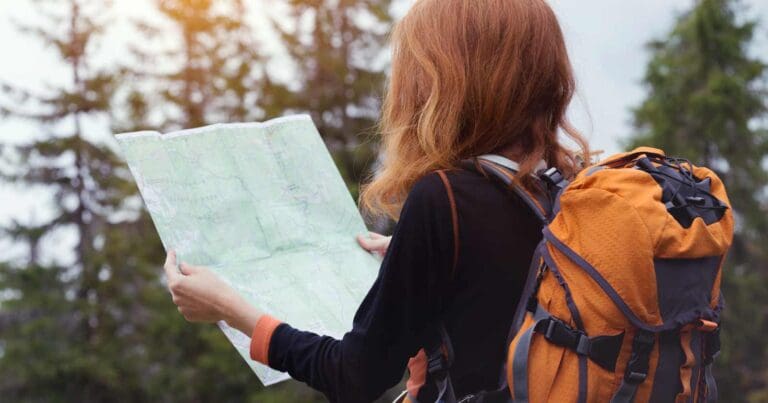
- Study the route and identify avalanche starting zones, runout zones, gullies, and alternative routes.
- Postpone the trip or choose safer terrain if conditions are unfavourable.
- Travel with trained and experienced companions.
- If entering avalanche terrain, ensure that every member of the group carries an avalanche transceiver, a probe, and a shovel, and knows how to use them.
- Practise companion-rescue procedures before an emergency occurs.
During the Hike
- Continuously reassess snow conditions and weather changes.
- Avoid slopes and runout zones identified as hazardous.
- Cross avalanche-prone terrain one person at a time, where appropriate, while the rest of the group waits in a genuinely safe location.
- Maintain communication and visual contact whenever possible.
- Do not assume that an established route is safe under all weather conditions.
- Turn back or change the route if conditions deteriorate.
If an Avalanche Starts
If you see an avalanche beginning above or near you, move out of its path immediately if there is a safe escape route. Try to reach the side of the moving snow rather than travelling downhill with it.
If you are caught in the avalanche:
- Try to move towards the edge of the moving snow and grab a stable object if one is safely within reach.
- Discard trekking poles or other equipment if they interfere with your ability to move.
- As the avalanche slows, try to keep one hand near your face and create space in front of your mouth and nose if possible.
- Once the snow stops, conserve energy and make yourself detectable if you are buried.
Survival depends on the circumstances, and these actions cannot guarantee escape.
If a Group Member Is Buried
Companion rescue is time-critical.
- Ensure that the remaining group members are not exposed to another avalanche.
- Call emergency services as soon as possible, without unnecessarily delaying immediate rescue actions.
- Switch avalanche transceivers to search mode and begin locating the buried person.
- Use a probe to pinpoint the person’s position and shovels to excavate them.
- Provide first aid as soon as the person is accessible.
Anyone travelling in avalanche terrain should receive practical training in avalanche awareness and companion rescue.
Final Safety Reminder
Avalanches are unpredictable, and apparently stable snow can conceal dangerous weaknesses.
Check the forecast, understand the terrain, carry appropriate rescue equipment, and be prepared to turn back. When conditions are uncertain, choosing a safer route is always the better decision.